
Essential Guide to Choosing the Right Floor Mat for Commercial Spaces
Choosing the right floor mat for commercial spaces is essential for safety, aesthetics, and durability. The right mat protects floors and creates a positive impression for clients. Assess your space’s specific needs, including foot traffic levels, flooring type, and environment.
Different floor mats serve various functions, from entrance mats that trap dirt to anti-fatigue mats for workstations. Understanding these distinctions helps you make informed decisions. Avoid pitfalls like selecting ill-fitting mats or neglecting maintenance to ensure a better long-term investment.
This guide provides a step-by-step solution for selecting the ideal floor mat, comparing types, and highlighting common mistakes.
Step-by-Step Solution for Selecting a Floor Mat
- Evaluate Your Needs: Consider foot traffic levels and safety requirements. High-traffic areas need durable mats, while low-traffic areas may have different needs.
- Choose the Right Material: Rubber mats offer slip resistance and durability, ideal for entryways. Vinyl mats are waterproof and easy to clean, suitable for restrooms or food service. Carpet mats enhance comfort in low-traffic areas like offices.
- Assess Water Absorption: Choose mats based on moisture levels. Heavy rain may require high-absorption mats, while drier environments need less.
- Measure the Area: Accurate measurements prevent tripping hazards. Ensure the mat fits well in the designated space.
- Consider Design Options: Custom logos or colors can enhance your brand image, but ensure they don’t compromise functionality.
By following these steps, you can balance functionality, safety, and aesthetics for your commercial space.
Comparison of Different Floor Mat Types
Understanding various floor mat types and their applications is crucial. Below is a comparison of common types
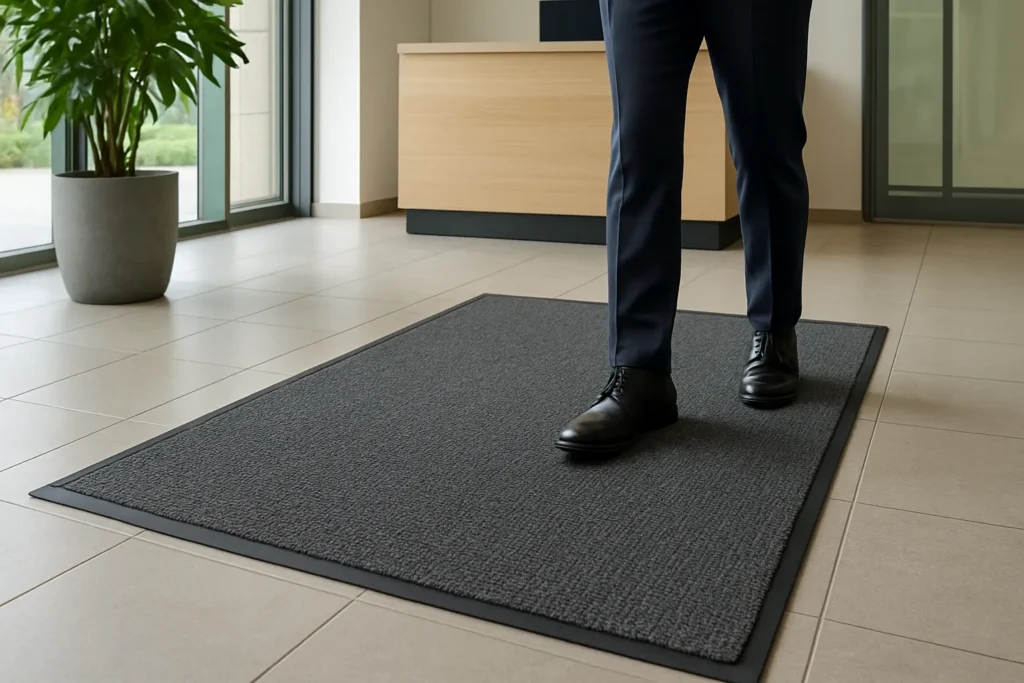
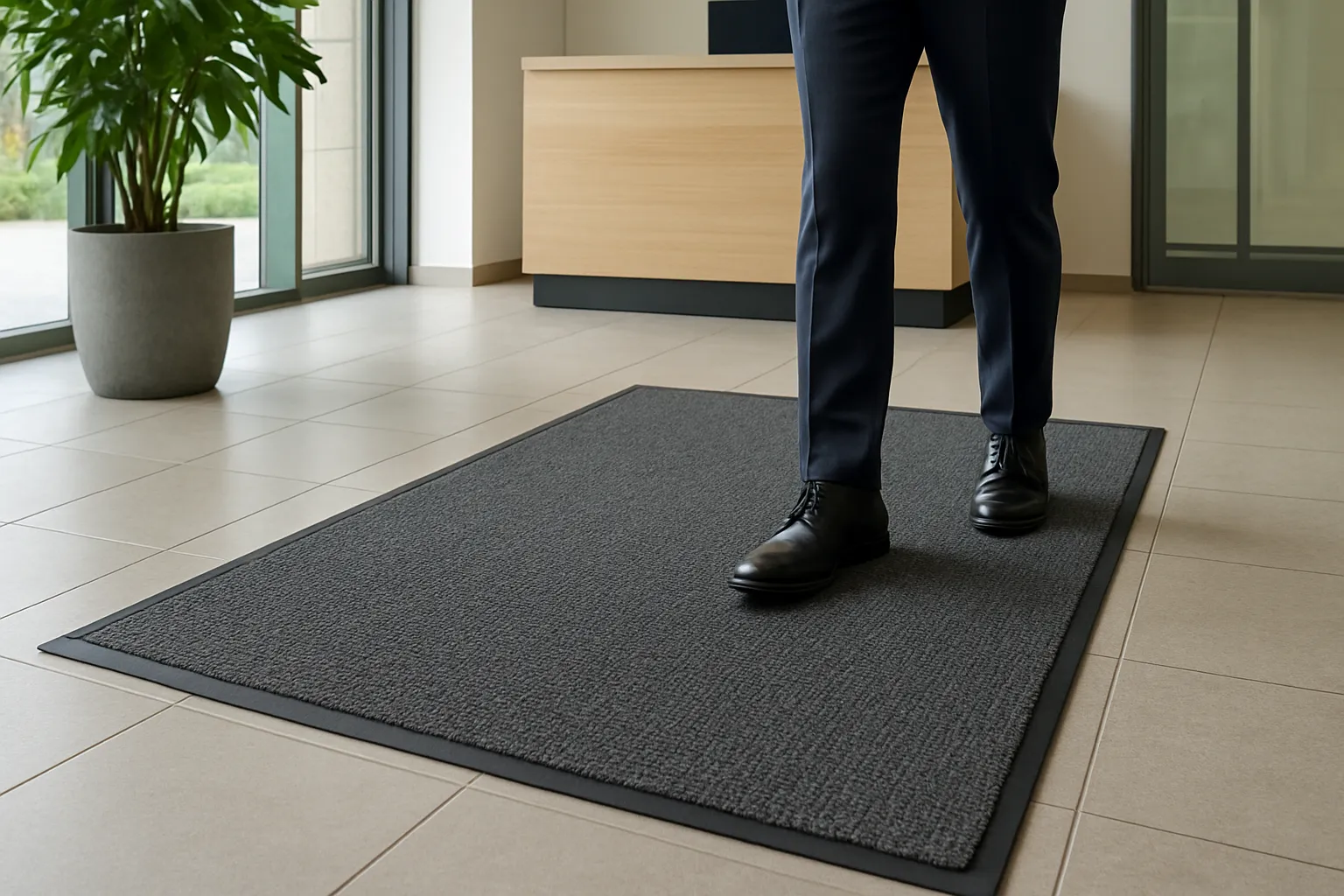
Entrance Mats: Designed to trap dirt and moisture, keeping floors clean. Made from durable materials like rubber or nylon, they reduce cleaning costs and improve safety but require regular maintenance.
Anti-Fatigue Mats: Essential for employees standing long hours, these mats provide cushioning to reduce discomfort. Common in retail and hospitality, consider thickness and material for comfort. Not all are suitable for wet environments.
Runner Mats: Long, narrow mats for hallways or workstations, protecting against wear. They maintain cleanliness and provide a non-slip surface but must be secured properly for effectiveness.
Comparison Checklist
| Type | Best Use | Material | Key Features |
|---|---|---|---|
| Entrance Mats | High-traffic areas | Rubber, Nylon | Traps dirt, reduces slip hazards |
| Anti-Fatigue Mats | Workstations | Foam, Gel | Cushions feet, reduces fatigue |
| Runner Mats | Hallways, workstations | Durable materials | Protects against wear, non-slip surface |
Common Pitfalls to Avoid When Choosing Floor Mats
Avoid these pitfalls to ensure effective mat selection:
- Size Issues: Choose mats that adequately cover the area. A mat too small won’t trap dirt effectively. Measure the space accurately.
- Cleaning Requirements: Consider how easy mats are to clean. Some materials require specific cleaning methods that can increase maintenance workload.
- Safety Compliance: Ensure mats meet safety standards to prevent slip hazards. Check for traction testing and certifications.
- Maintenance Neglect: Regular cleaning and timely replacement are vital for longevity. Create a checklist for size, cleaning, safety compliance, and maintenance plans to guide your decisions.